
Decoy Strategy
Duck Decoy Spreads for Timber Holes: What Actually Works
Stop overcrowding your spread. Here’s the timber hole setup that consistently brings mallards in low and slow — with the gear that makes it happen.
By Grant | Drake & Drum
⚡ Quick Picks
Best Timber Decoys
Avery GHG Essential Mallards
Best Spinning Wing
Lucky Duck Air Lucky HD
Best Budget Motion
Rig’Em Right Jerk Rig
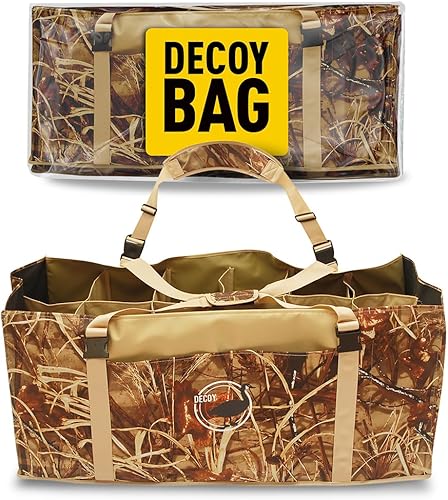
Best Decoy Bag
DecoyPro 12 Slot Bag
Timber hole hunting is different from field hunting, flooded rice, or open water. The ducks are already circling — they know the area, they’ve used that hole before, and they’re looking for company. Your job isn’t to attract birds from miles away. Your job is to convince the ducks already overhead that it’s safe to drop in.
That means your spread has to look relaxed, natural, and inviting — not a chaotic pile of plastic. This guide breaks down exactly what works in flooded timber: the right number of decoys, the right motion, and the gear that holds up when you’re wading into chest-deep water at 4 AM.
Why Timber Holes Demand a Different Spread
In a flooded timber hole, you’re typically working a clearing 20–40 yards across surrounded by flooded oaks or cypress. Ducks don’t need to be convinced the habitat is good. The acorns, shallow water, and cover do that. What they need is to see other ducks already working the area comfortably.
🦆 The Golden Rule of Timber Spreads
Less is more. 6–12 decoys in a timber hole almost always outperforms 24+. Tight quarters don’t need a crowd — they need a convincing family group.
- Fewer decoys: 6–12 is the sweet spot. Overcrowding reads as unnatural pressure to educated birds.
- Tight landing zones: Leave a clear gap in your spread where you want birds to commit — right in front of your position.
- Motion is critical: Still water and still decoys in timber looks suspicious. One jerk rig or spinning wing handles this.
- Weight your lines heavier: Brush, submerged logs, and current can tangle light rigs. Use at least 1.5 oz anchors.
Best Decoys for Timber Holes
You want durable, realistic keel floaters that handle being tossed into shallow water with submerged timber. Here’s the top pick.

Motion: Spinning Wings vs. Jerk Rigs in Timber
Motion is non-negotiable in timber. The debate isn’t whether to use it — it’s what kind. Here’s the honest breakdown.
🌀 Spinning Wings
- More visibility from altitude — pulls birds in from farther
- Best on early season birds that haven’t been pressured
- Needs battery, takes more setup
- Late season: educated birds sometimes flare at them
🎣 Jerk Rigs
- Subtle ripple — perfect for pressured late-season birds
- No batteries — cold weather proof
- Looks like feeding ducks, not landing ducks
- Works best in dead calm timber water


Comparison: Timber Hole Gear at a Glance
| Product | Type | Best For | Battery? | Season |
|---|---|---|---|---|
| Avery GHG Essential Mallards | Float Decoys | Core spread base | No | All Season |
| MOJO Baby Mallard Spinner | Spinning Wing | Pulling distant birds | Yes | Early Season |
| Lucky Duck Air Lucky HD | Spinning Wing | HD realism close-in | Yes | Early–Mid Season |
| Rig’Em Right Jerk Rig | Jerk Rig | Pressured late birds | No | Late Season |
| DecoyPro 12 Slot Bag | Decoy Bag | Hauling spread in/out | No | All Season |
The Timber Hole Layout That Works
Here’s the setup that consistently produces. Adapt for hole size, but don’t overcomplicate it.
- 6–8 GHG floaters in a loose U-shape or horseshoe opening toward your blind. The gap = landing zone.
- 1 spinning wing or jerk rig on the near edge of the opening. Spinner? Position it so circling birds pass it first, then see stationary floaters as safe to land.
- Leave 15–20 feet of open water in the landing zone. Ducks don’t crash-land into a wall of plastic.
- Use 2 oz anchors minimum — submerged timber and root systems drag light rigs under.
- Mix decoy postures: blend sleepers, feeders, and lookers for a natural resting group look.
Build Your Timber Hole Arsenal
Start with 12 GHG floaters and a jerk rig. Add a spinner once you’ve dialed your hole. That’s a complete timber setup for under $300.
Keep Reading
- Duck Hunter’s Field Guide & Season Planner — species ID, state regs, scouting systems, gear checklist ($14)
- Best Duck Hunting Shotguns: Top Picks Reviewed
- Best Duck Hunting Ammo: Shot Size and Load Selection Guide
- How to Scout Duck Hunting Locations: A Complete Field Guide
- Best Duck Calls for Beginners